The Reality of AdMob Revenue in Indonesia (2026): From $1 to $80 a Month (Zero Promotion Cost)
Table of Contents ▼
Many beginner developers dive into the world of Android app creation with one big dream: getting rich quick from Google AdMob. They are often lured by screenshots of thousands of dollars in earnings circulating in Facebook groups or Telegram forums.
Indeed, those success stories exist and are very real. One example comes from a factory worker (not an IT practitioner) who happened to collaborate with one of my senior colleagues. The factory worker spent around $100 to buy the source code and reskin services for a children’s drawing and sound app from that senior. The result? He successfully raked in $1,000 to $1,500 per month!
However, what is rarely told in forums is the dark side: far more people end up losing hundreds of dollars, wasting time, or having their accounts kicked out by Google due to a lack of knowledge and just blindly following trends.
I am not a saint free from developer sins either. Long before the Play Console account I use today existed, I had an account named herdaynote between 2020-2021. Back then, I was very naive. Armed with source code found on the internet, I tried to make a clone game of Flappy Bird using the exact same name. The game was repeatedly rejected because the code was a mess and unoptimized. The end result? My first account was permanently banned by Google.
From that destruction, I learned. I started building applications focused on utility, like my Algorithms and Programming Book (Buku Algoritma dan Pemrograman) app, purely as a digital footprint and a moral responsibility for the knowledge I acquired. If that work later generated money from ads, it was purely a bonus.
Today, I invite you to see the reality of the AdMob world in the Indonesian market (Tier 3) in 2026. No sweet promises here, only transparent data, market reality, and expensive lessons learned from past mistakes.
The Perfectionist Myth vs. Market Reality
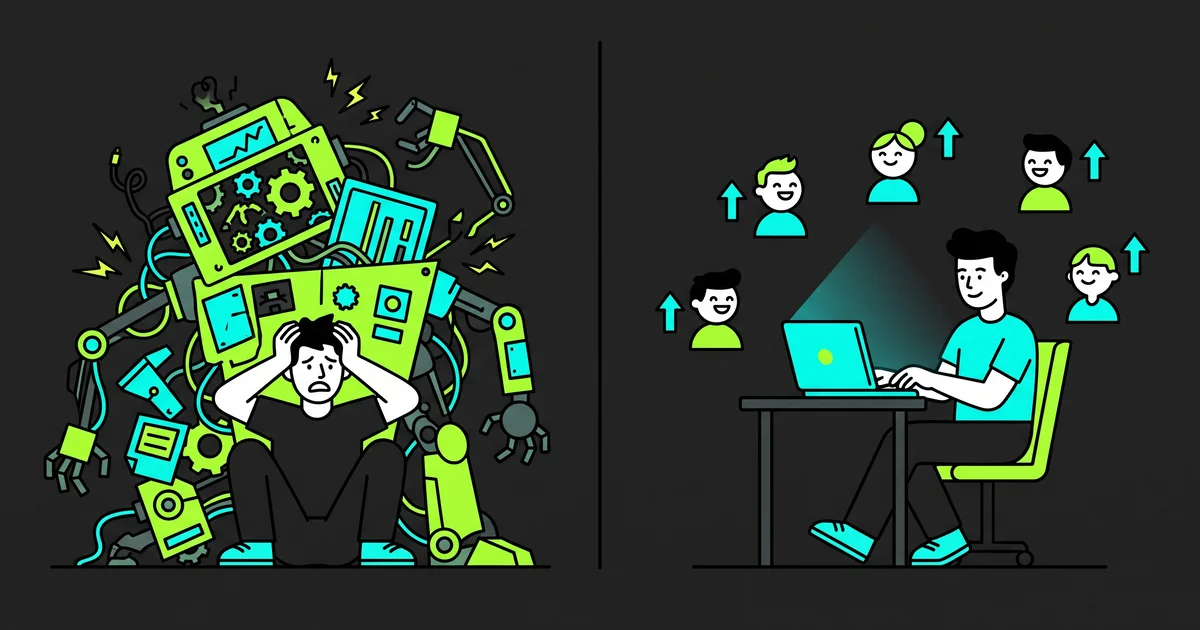
Before we get into the numbers, there is one reality check you must realize: developing an app doesn’t have to be perfect; what matters is solving the user’s problem.
I have a few friends with ironic stories that serve as great lessons:
- The Unity Engine Tragedy: A friend of mine who is an expert in design spent months developing a Mario-like game using Unity. The size ballooned to 150 MB. When submitted, the game was rejected because it lagged (too heavy) and its massive size. After struggling to find a workaround and finally releasing it, what happened? The game was as deserted as a graveyard. The time and licensing costs invested were all for nothing.
- The Flutter Feature Trap: Another friend built a CV Generator app using the Flutter framework. He spent months endlessly crafting a complex UI. He didn’t think about where the revenue would come from, the app was unstable, full of bugs, and in the end, it never saw the light of day.
- The Simple Winner: In stark contrast to the stories above, a senior of mine once spent a very long time gathering data for an exam question bank app. The result? It didn’t sell well on the Play Store. Disappointed, he casually created a very simple Frame Photo app (like Twibbon). In a short time, that simple app reached thousands of users and generated a very decent income!
The golden lesson: Don’t waste months making a perfect app that people might not even need. Build a simple app, release it quickly, gauge the market response, and improve it slowly.
Data Breakdown: Peeling Back the Numbers Transparently
Let’s dissect my AdMob revenue kitchen. The data below is the accumulation of all the native Android apps I currently manage.
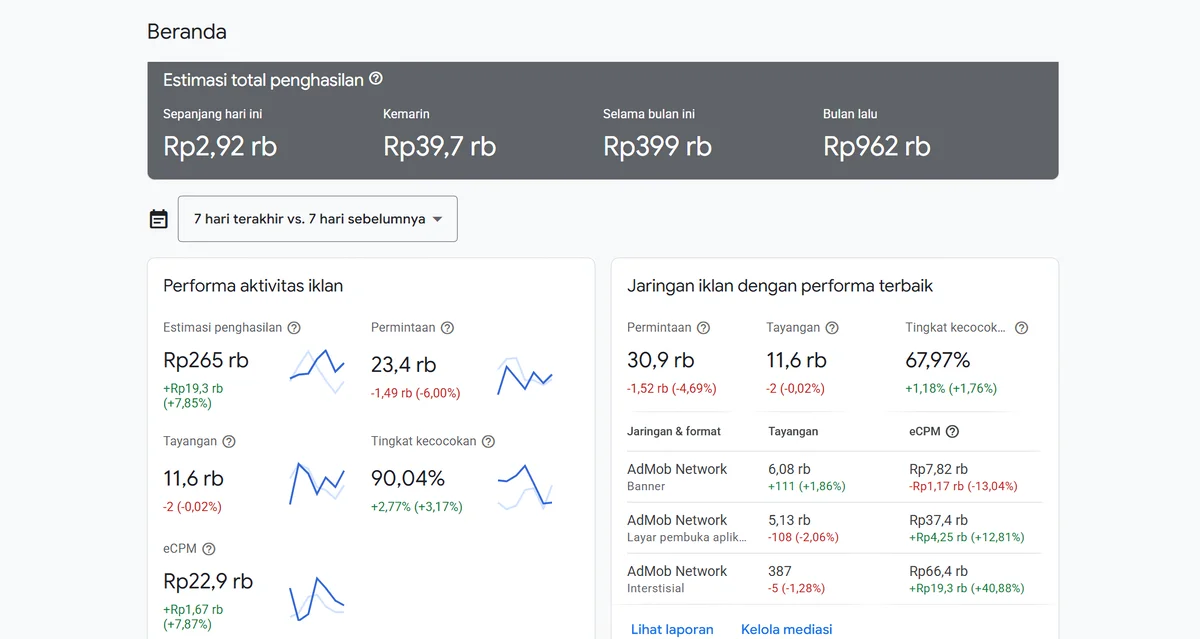
(Note: The image above shows estimated daily and monthly earnings in Rupiah, eCPM, and organic impressions).
The metrics are actually very simple and realistic:
- Daily Impressions: My apps average only 1,300 to 1,500 ad impressions per day.
- eCPM Value: In the Indonesian market, my eCPM (earnings per 1,000 impressions) averages around Rp22,000 (or roughly $1.00 to $1.50).
- Daily Revenue: The final result of combining those impressions and eCPM is about Rp30,000 to Rp40,000 per day (around $2 to $2.50).
This might look tiny to top-tier developers. But for me, this is a very stable passive income. And the most important thing: all this traffic is 100% pure organic. Users find my apps through App Store Optimization (ASO), without me having to burn a single cent on paid promotion.
This chart didn’t spike overnight. This is a marathon:
- Year 2023: Rp14,000 / month (approx. $1).
- Year 2024: Climbed to Rp300,000 / month (approx. $20).
- Year 2025: Crawled to Rp600,000 / month (approx. $40).
- Year 2026: Stable in the range of Rp900,000 to Rp1.2 million / month (approx. $60 - $80).
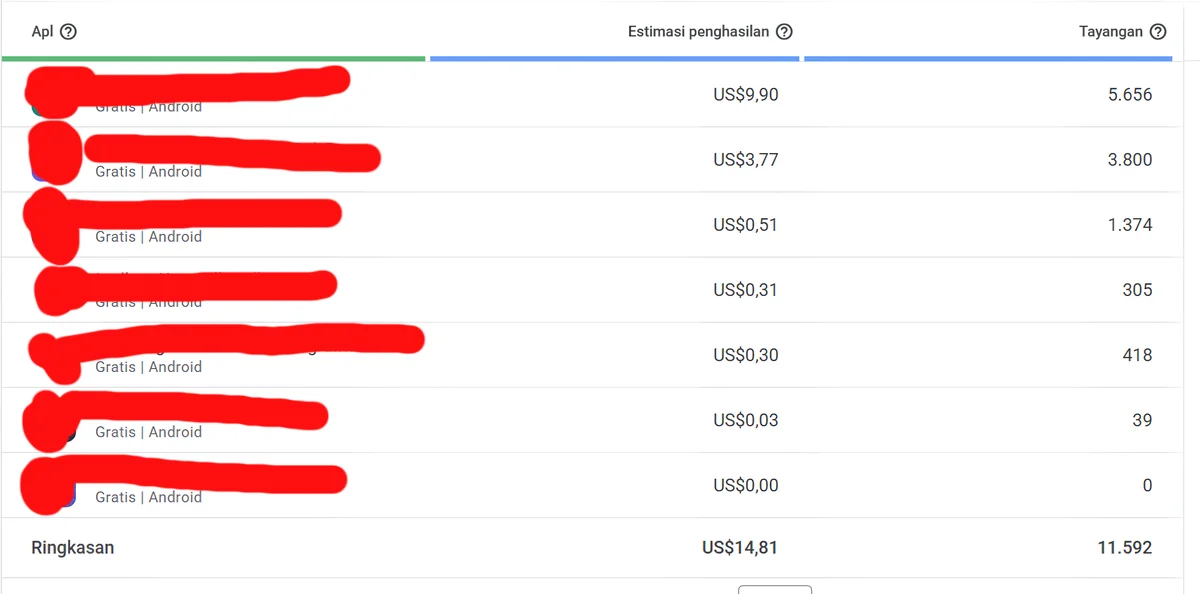
The “Anti-Greed” Strategy: User Experience (UX) Over Money
A junior of mine plays the reskin app game (like Twibbon). He rakes in Rp1 million to Rp1.5 million per month (around $65 - $100) from just one app. Sounds tempting? Wait until you download his app.
The UI is problematic, the image export feature often throws errors, banner ads pile up ruining the view, and every time a button is clicked, a full-screen ad (Interstitial) explodes in your face. Gross income like this might taste sweet in the first month, but trust me, an app with such terrible UX won’t last long in the grand scheme of things.
My monetization strategy is the exact opposite: Limit ads, keep the app fast, and make users comfortable.
I rely on only two ad formats:
- App Open Ad: This is the backbone of my largest impressions. This ad not only appears when the app is first opened, but also when the user reopens the app after leaving it for a while (I usually set a 5-minute delay). This format generates many impressions without interrupting the user’s interaction flow within the app.
- Banner Bottom: A small banner at the bottom that does not cover buttons or content.
What about Interstitials (full screen)? I limit them severely. I only display them in specific apps (like TPA Pro, CPNS Simulation, or logic games), and even then, they ONLY appear during natural breaks (for example, when a user finishes a block of questions).
A Secret Tip from My Kitchen: Every 1st to 3rd of the month, I routinely open the “Ad Review Center” in AdMob to block online gambling, pornography, and scam ads. Clean ad quality keeps your app lightweight and trusted by users.
3 Other Fatal Mistakes Beginners Make
Besides making silly clones like my first experience, avoid these three deadly sins:
1. Stupid Ad Code (Infinite Loop) When an app fails to load an ad (due to a bad signal), poorly written code will request the ad again endlessly every fraction of a second. This triggers an infinite loop. Google’s system will detect this as a spam attack, and you will immediately be hit with a 30-Day Ad Serving Limit (zero revenue for a month).
2. Self-Clicking Syndicates (Boom Click) Wanting to get paid fast, many beginners rent or borrow friends’ phones to brutally click their own ads. Please, do not underestimate Google’s AI intelligence. GPS trails, IP Addresses, and their algorithms can detect fraudulent clicks within hours. Your account is toast.
3. Buying “Garbage” Source Code If you buy source code to reskin, check the code! Many lazy sellers leave hardcoded ad codes or heavy navigation structures. As a result, when you publish it, your account risks suspension due to “Repetitive Content”.
Conclusion: Consistency vs. Policy Loopholes
Since Google Play Console required new developers to conduct Closed Testing for 14 days with a minimum of 20 real users, the Android ecosystem has theoretically become very strict. The goal is good: to filter out spammers.
However, the reality on the ground is that the highly profitable “junk app” rotation business is still constantly finding loopholes. My senior, for example, once shared his experience bypassing this 14-day rule by doing an App Transfer from an old Play Console account to a new one.
While tricks like this might initially get an app published, poorly made and manipulated apps will eventually be highly susceptible to rejection or suspension when it’s time for an update maintenance.
Don’t be tempted by shortcuts or policy loopholes. Finish your app, release it, learn ASO, take care of its UX, and be patient. Let that organic revenue grow sustainably, following the quality of your work.
Keep writing code and creating value!